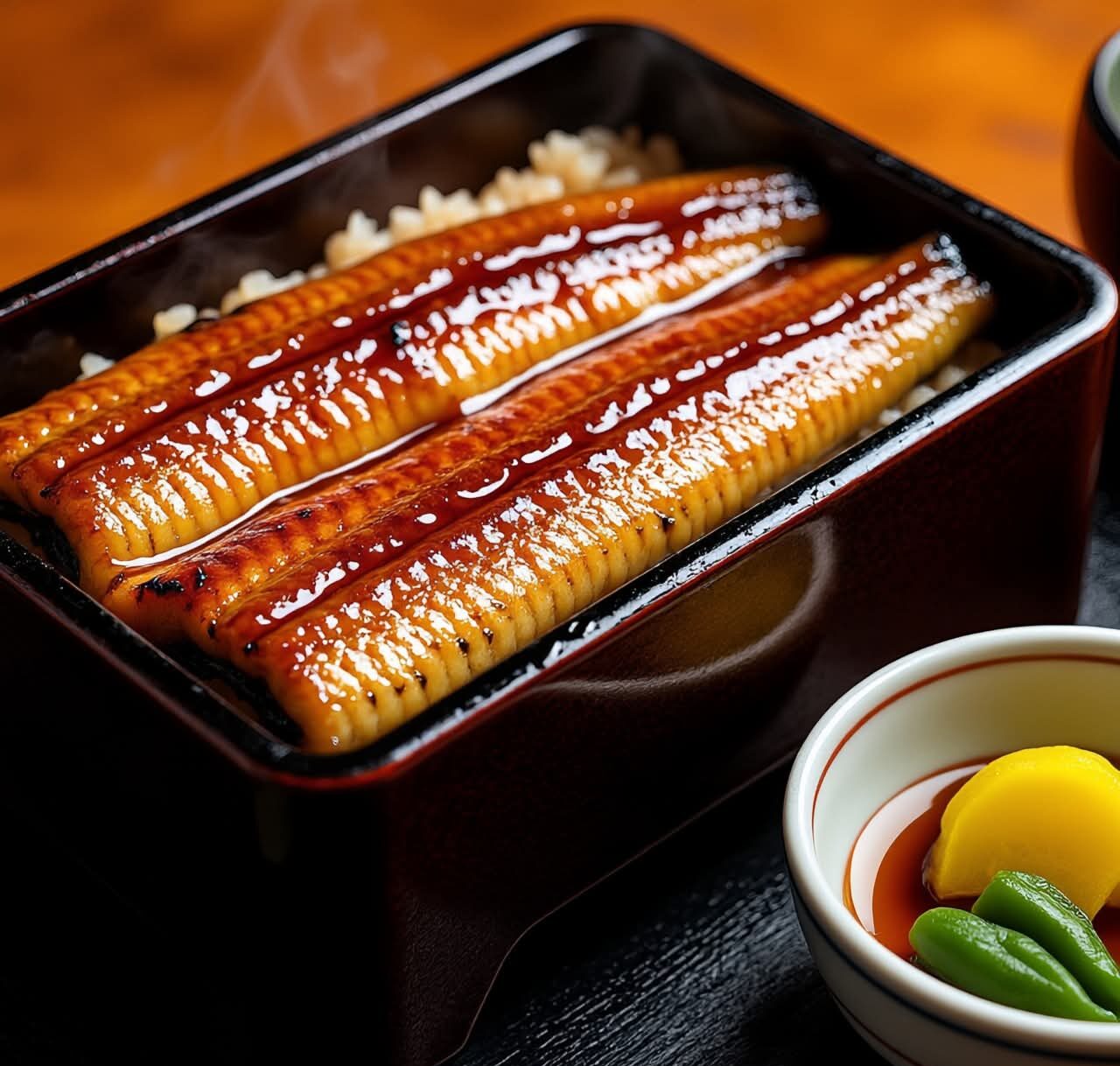
When it comes to eel in Karuizawa, “Yondaime Kikukawa” is the place to go.
In the summer of 2026, *Doyo no Ushi no Hi* (the Midsummer Day of the Ox—traditionally the best day to eat eel) falls on Sunday, July 26th.
With the day fast approaching, I decided to enjoy some eel a little early!
Personally, the eel here was a revelation—it was so impressive that it completely changed my concept of what eel could be; it was almost a culture shock.
It is an experience I highly recommend to everyone! ☆
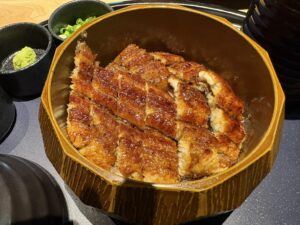
The signature dish at Yondaime Kikukawa is the “Meibutsu Ippon Unagi” (Famous Whole Eel).
As the name suggests, you are served a whole eel—head to tail!
I was told, “We fillet the eel after receiving your order, so it will take about 20 minutes.”
My reaction was, “Wait, only 20 minutes?”
At traditional eel shops in Tokyo’s old downtown areas, you often can’t make reservations, or the process takes 40 minutes because they fillet it fresh; so, 20 minutes is incredibly fast!
Before I knew it—while I was busy chatting—the eel arrived.
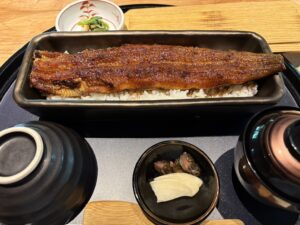
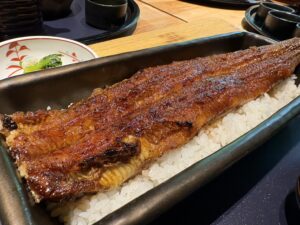
The menu features a life-sized photo, so I knew what to expect, but seeing the actual dish, the eel was massive and substantial! It came with the lid on, but the eel was so big it wouldn’t even close properly (lol).
Since the restaurant hails from Nagoya, they also offer *Hitsumabushi* (chopped eel served over rice). If you choose the *Hitsumabushi* option, the portion of eel is about 70% of the “Whole Eel” serving.
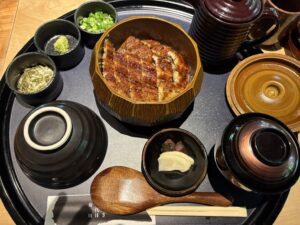
You can choose from large, medium, or small portions of rice.
The medium (standard) portion was 260g, and the small was around 160g.
Other options included *Kabayaki-ju* (grilled eel over rice in a lacquer box), sashimi sets, and tempura sets. There was also the “Yondaime Kikukawa Gozen” (special set meal)—perfect for those who want to enjoy a little bit of everything: eel, tempura, and sashimi.
As noted in other Google Maps reviews, the staff are excellent and provide courteous, attentive service—another highlight of the experience. As for the all-important taste…
I had expected the usual “delicious eel” experience—specifically, a melt-in-the-mouth, fluffy texture—but what I found was a crisp exterior that wasn’t too hard, while still retaining a bit of that signature fluffiness inside.
The savory aroma from the charcoal grilling is fantastic, too.
What’s more, it’s not greasy at all—it has a clean, refreshing finish! Wow, this is delicious… ☺
I’ll admit I was a bit cynical at first, thinking, “Isn’t eel mostly just about the taste of the sauce?” but this dish didn’t need any extra sauce at all.
Of course, extra sauce is available, and they provide whole Sansho peppercorns that you can grind fresh over the dish. The aroma is wonderful—feel free to adjust the seasoning to your liking!
A friend who joined me wondered if the portion might be too big, yet they managed to finish the entire *Hitsumabushi* (eel over rice) meal—which included a generous 260g of rice—without a problem. The men in our group were truly impressed by the impact and volume of the “Ippon Unagi” (whole eel) and, above all, by the incredible taste.
It comes at a premium price, but the satisfaction you get is well worth the cost—or even exceeds it.
The Secrets Behind “Yondaime Kikukawa’s” Deliciousness
“Yondaime Kikukawa” started out as an eel wholesaler.
With a history spanning over 90 years, they supply eel to numerous renowned eel restaurants.
Because the restaurant is operated directly by this wholesaler, they are able to serve exceptionally fresh eel.
In 2019, they were even selected for the Michelin Plate (now known as “Michelin Selected Restaurants” *1).
Meticulous attention to the serving vessels.
The special dish used for their signature “Ippon Unagi” is custom-made by a kiln with a history dating back to the Edo period; it offers excellent heat retention, ensuring the eel stays warm until it reaches the table.
Great care is also taken with the dining space.
To allow guests to see their eel-cooking techniques firsthand, every location features an open “live kitchen.” They offer a variety of seating options—including counter seats, tables, and private rooms—to accommodate everything from formal ceremonies and business entertainment to special celebrations. Notably, they avoid a uniform look across locations; instead, they commission different architectural designers for each new restaurant.
They have consistently strived to create a “clean, comfortable Japanese-style space” that breaks the mold of traditional eel specialty restaurants.
The interior is indeed sophisticated and stylish, offering an atmosphere that contrasts sharply with the typical, old-fashioned eel shop. The restaurant attracts many international guests, with diners of various nationalities enjoying the experience.
There is parking for about four cars in front of the shop, though the spaces are somewhat tight.
If the lot is full, I recommend using a nearby paid parking lot.
I’ve detailed recommended parking options in another article, so please check it out here:
https://sakukaruizawa-english.com/frenchbakery-with-john-lennon-38
You can make reservations via Tabelog, which is very convenient.
Details are available on their official website; with 27 locations in Japan and 19 overseas (primarily in Asia), I encourage you to visit a branch near you!
*1 Selected Restaurant: An establishment confidently recommended by inspectors for offering high-quality cuisine that meets Michelin’s rigorous standards.
How does it differ from Bib Gourmand? Bib Gourmand is awarded to restaurants offering “satisfaction beyond the price point” (i.e., great value for money), whereas “Selected” status is awarded to restaurants where the food is “simply delicious,” regardless of price range.
How does it differ from starred restaurants? While it doesn’t involve the specific “one-to-three-star” ranking system, the list includes outstanding establishments that are candidates for stars or Bib Gourmand status, as well as long-beloved, renowned restaurants.
That wraps up my post on “Yondaime Kikukawa,” The Karuizawa eel restaurant—their “Ippon Unagi” (whole eel) is highly recommended!
コメント